Call us anytime +255 754 282 704
Let us plan your next adventure

Call us anytime +255 754 282 704

Let us plan your next adventure

Your Cart

Your cart is empty


Plan your Tanzania Safari

Get essential trip information for your Tanzania safari with Myriad Safaris - Attractions, health tips, packing lists, best time to visit, and more.

Home > Travel Information > Tanzania

About Tanzania

Tanzania is bordered on the south by Mozambique, Malawi, and Zambia; on the west by Zaire, Burundi, and Rwanda; on the north by Uganda and Kenya; and on the east by the Indian Ocean. Tanzania is the largest of the East African nations, and it possesses geography as mythic as it is spectacular.

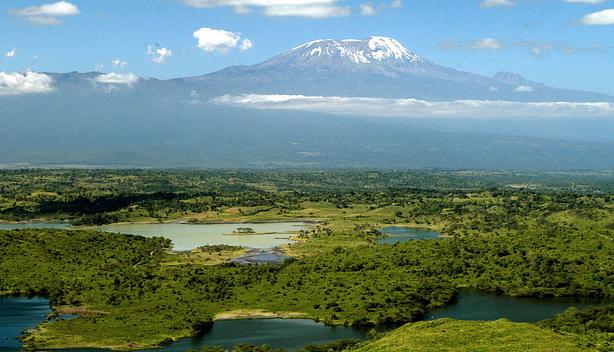
 In the northeast of Tanzania is a mountainous region that includes Mt. Meru (14,979ft/4,566m) and Mount Kilimanjaro (19,340ft / 5,895m), the latter of which is the highest point in Africa and possibly the most breathtaking mountain imaginable. 

To the west of these peaks is Serengeti National Park, which has the greatest concentration of migratory game animals in the world. Within the Serengeti is Olduvai Gorge, the site of the famous fossil discoveries of the very earliest ancestors of Homo sapiens by Dr. Leakey. 

Moving west from the Serengeti, one reaches the shores of Lake Victoria, the largest lake on the continent and one of the primary headwater reservoirs of the Nile. Southwest of Lake Victoria, and forming Tanzania’s border with the democratic republic of Congo formerly known as Zaire, is Lake Tanganyika, the longest and (after Lake Baikal) deepest freshwater lake in the world. It was at Ujiji, a village on the Tanzanian shore of Lake Tanganyika, that H.M. Stanley presumably encountered David Livingstone in 1871. Livingstone had fallen ill while searching for the source of the Nile, and despite his illness he refused to leave. Instead, he persuaded Stanley to accompany him on a journey to the north end of Lake Tanganyika. The region that they passed through has since become famous as Gombe National Park, the site of Jane Goodall’s chimpanzee research station. 

The Great Wildebeest Migration

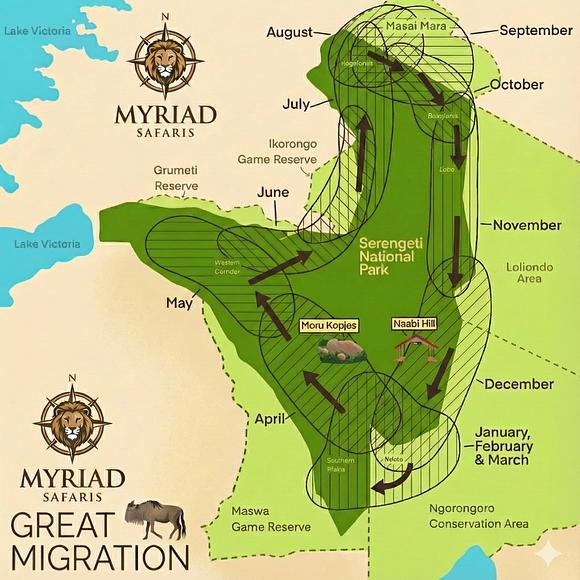
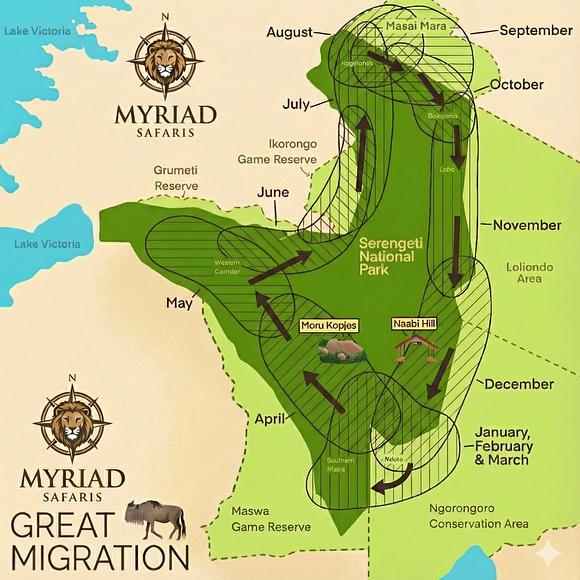
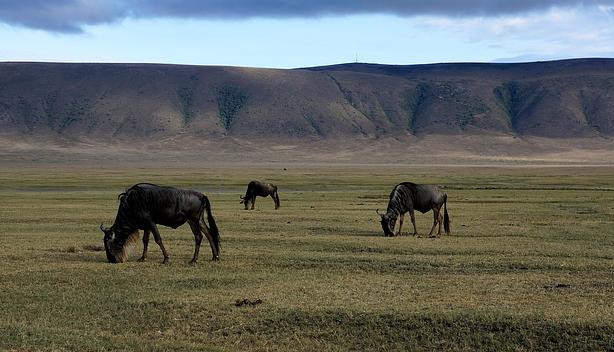
The principal World attraction of the Serengeti is the passing of the wildebeest migration of at least 2 million wildebeest, and a retinue comprising of hundreds of thousands of zebras, gazelles and other plains game that follow close behind, stalked by the inevitable predators who make the most of the feast close at hand.


Twice a year, triggered by the rains, 2 million wildebeest, 200,000 zebra and 300,000 Thomson’s gazelle gather to undertake the long trek to new grazing lands. The migration of these herbivores defines the boundaries of Serengeti National Park, which is the central zone of the Serengeti ecosystem, an area that also takes in Kenya’s Maasai Mara National Reserve.

At first, it is just a trickle. An advance guard of zebras and a few columns of wildebeest. The trickle soon becomes a flood as the main body of the migrating herds comes rumbling in. Some arrive at the water and swim over immediately while others spend days grazing. Still others turn back to where they have come from. They cross and spill onto the savannah plains of the Masai Mara National Reserve. The reserve which is in Kenya forms part of the continuous ecosystem with the Serengeti National Park in Tanzania.  

For the next three to four months, usually between July and October, they stay in the Mara enjoying the fresh green pastures. They remain until the arrival of the short rains sometime in October or November. Then, Tanzania draws them south once again.
Unfortunately, the spectacle of the migration is misunderstood by many visitors which can lead to disappointment. It is not a mass of rushing herds as often seen on TV and in documentaries. Most of the time the wildebeest spend time grazing and gradually moving forward towards the numerous water crossings. It takes time and patience to see them lining up in columns. Plus, luck to be at the right place at the right time when they decide to cross.

The Calving Season.

Calving Season


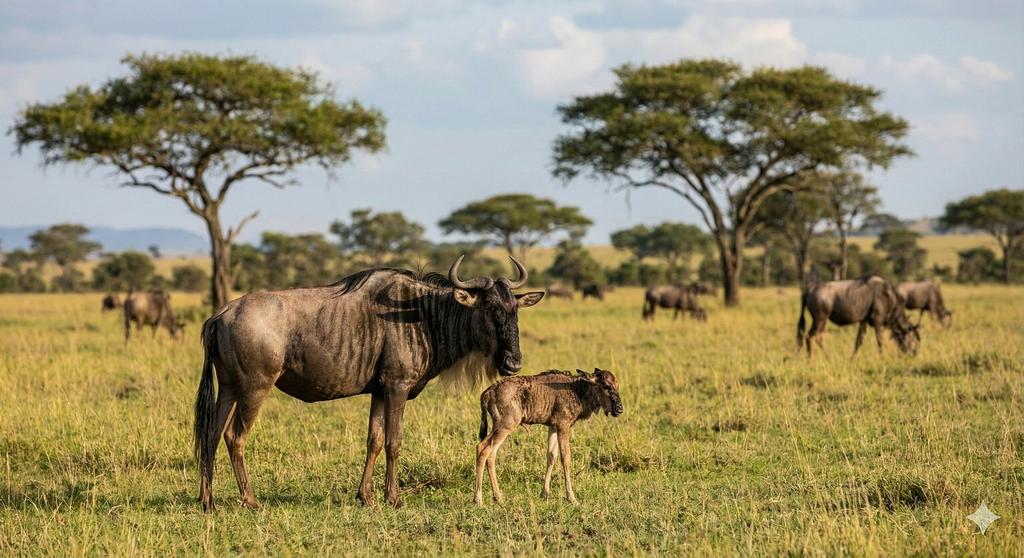
The Serengeti Plains experience the greatest number of new borns on the planet of over half a million wildebeest calves are born. The female wildebeests are usually heavily pregnant by the time they reach the southern plains of Serengeti around late January or early February. The Area has enough pasture with rich nutrients good for the calves and lactating mothers. It is also here that they make the longest stop (three - four months) before they begin movements heading west following the rainfall pattern. It is this moment of birth that a story begins. Imagine this, Delivering is quick, every minute counts, mother and calf must form a lasting bond based on smell, taste and sound. It is this relation that will sustain them during the long journey that lies ahead and in order to survive, the calf must master in minutes what a human baby would take a year to learn. They learn to use their legs faster than any other mammal. I under 4 minutes, it is up and ready and stable enough to outrun a Hyena. It’s really an interesting phenomenal.

Tanzania Highlights

NGORONGORO CONSERVATION AREA

The Ngorongoro Conservation area covers some 8,300 sq km, of which the renowned Ngorongoro Crater only makes up about 3% - equal to approximately 260 sq km. The conservation area also encompasses the volcanic area around the famed crater including the still active volcano of Oldonyio Lengai, and the famous Olduvai Gorge. Its centerpiece, the Ngorongoro Crater, often referred to as the eighth wonder of the world is the largest unbroken caldera in the world, and the first sight of it is truly breathtaking. The floor of the crater is home to a year-round population of varied wildlife, including the almost extinct black rhino. Animal densities are high, and game viewing is excellent, with visitors often being able to get up close to the now almost habituated ‘wild’ animals.

OLDUVAI GORGE

This ‘Cradle of Mankind’ is a treasure trove of archaeological sites, filled with fossils, settlement remains and stone artifacts. One can see the evolution of prehistoric man in the landscape’s geological strata.
It is the world-famous site of the Leakey’s discovery of a hominid skull dating back 2 million years.
There is a small but very informative museum located at the visitors enter. 

SERENGETI NATIONAL PARK

Established in 1951, and covering an area of almost 15,000 sq km, Serengeti is one of the most spectacular game parks in East Africa. From its short and long grass plains in the south, which give way to Acacia savannah in the central area, to the hilly more densely wooded areas of the north, and the extensive woodland in the western corridor. Serengeti offers great variations both geographically as well as with the millions of animals, birds and plants that go to make up this complex ecosystem. 

The principal attraction of the Serengeti is the passing of the famed wildebeest migration, comprising about 1.5 million wildebeest, as well as the thousands of zebras, gazelle and other plains game that follow close behind, and the inevitable predators who make the most of the ‘feast’ close at hand.

TARANGIRE NATIONAL PARK

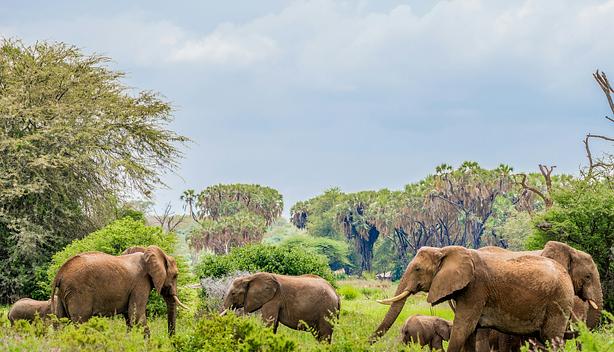
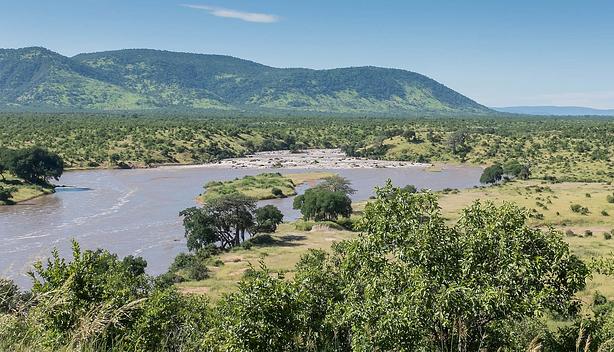
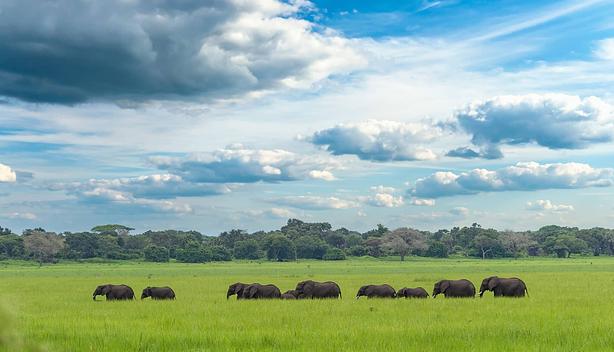
This delightful park, covering an area of 2,600 sq km was established in 1970, and it is the numerous baobab trees that will initially catch your eye. The Tarangire river running through the center of the park provides a year-round supply of water to the thirsty animals, and at certain times of the year (especially from July through to October) attracts thousands of animals, especially elephants in large herds.

The park is made up of 8 distinct vegetation zones varying from swamps, to open grasslands, and acacia parkland. For the bird watching fanatics, Tarangire is said to have the highest recorded number of breeding bird species for any habitat in the world!

ARUSHA N. PARK

Only 32 km from Arusha and less than 140 sq km, this small park offers an amazingly varied topography, from the rocky craters and ash cone of Mount Meru and the mountain forest of its slopes to the flamingo lakes of Momela. The forests are home to the park’s renowned black and white Colobus monkeys, and the lower areas to a variety of mammals, especially elephants, buffalo and giraffe. Walking safaris are possible for the more adventurous traveler.

Nyerere National Park (formerly Selous Game Reserve)

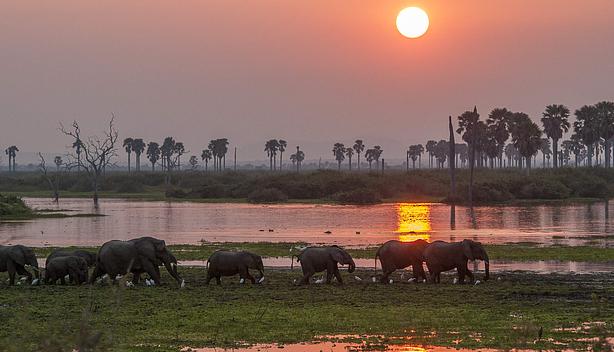
To which Mikumi National Pak is adjacent, Nyerere national park, south-eastern Tanzania has some of the finest virgin bush left in Africa, where the last of the really big-tusked elephants and large-maned lions roam. It supports around one million head of game and is a World Heritage site. The park is relatively easy to get to by a 4WD, at least eight hours drive from Dar. Alternatively, there are scheduled flights too that operate.
From March to May floods sweep the valley, forcing the game on to the ‘islands’ of higher ground, where elephant, buffalo, lion, leopard, crocodile, puku, buck, eland, sable and others concentrate. 

Mikumi National Park

elephant feed by the Mkata river, and lion, buffalo, hippo, giraffe and many other species can be seen, including an occasional sable antelope and greater kudu. June to November is the best time for a visit, this being the dry season, though the Park is open all year round. 

More than 300 species of birds have been recorded here including Eurasian migrants such as red billed oxpecker, marabou stork and lilac breasted roller, who stays between October and April. There are more interesting bird species in the miombo woodland, for example, Shelleys double collared sunbird, pale billed hornbill and violet-crested Turaco as well as violet-backed starling  

The surrounding mountain and hills bring compelling natural beauty with addition to superb light, make it a wonderful venue for wildlife photographers. It is common to see elephants, lions and sometimes giraffes on/along the Tanzania-Zambia highway

Ruaha National Park

Derives its name from the Ruaha River, which flows along its southeastern border. The river provides permanent water in the park and, during the dry season, animal concentration along its banks is extremely heavy. 

Ruaha National Park is about two to three hours’ drive from Iringa, a famous town on the Dar - Zambia highway, and covers an area of 12, 950sq km, making it the second largest National Park in Tanzania, after Serengeti. The park is mainly woodland which provides a different habitat as compared to the popular northern Tanzania plains reserves. Ruaha National Park is famous for its elephant herds and animals that are rarely seen in the northern parks, like the greater kudu and the roan antelope. Other animals that are common include the sable antelope, lesser kudu, lions, leopard, hunting dog, buffalo, impala, waterbuck, warthog, giraffe, bushbuck, and the hippos and crocodiles which inhabit the Ruaha River. The park is also rich in bird life. The best time to visit the park is during the dry season, from May to December, when animals are concentrated along the river.

Rubondo Island National Park

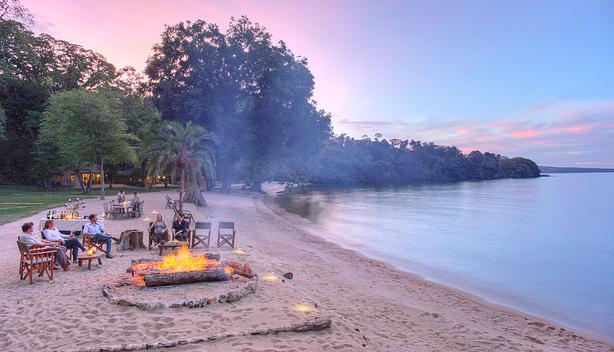
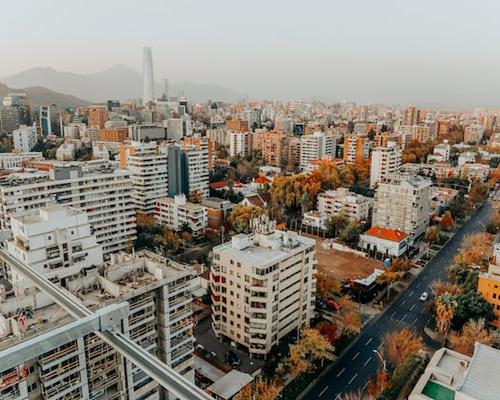
Rubondo Island, in Tanzania’s Lake Victoria is tenth National Park. The area of Rubondo is about 240 sq km where visitors can combine Wildlife Safari and Beach holiday. 
The Island combines the breathtaking natural beauty of a forest with relaxing tranquility of sand lake - shore beaches. It is a bird lovers paradise with nearly 400 different species documented. Theye include; Fish eagles, Hadada Ibis, Sacred Ibis, Grey Herons, Egrets, Kingfishers, Avocets, Lapwings, Open billed stocks, and other birds from Central and Southern Africa.

LAKE MANYARA NATIONAL PARK

This saline lake lies 130 km from Arusha on the floor of the rift Valley. From its shores the steep sides of the rift rise over 300 m to form a spectacular cliff. The park is 323 sq km in area and offers a wide variety of vegetation: lush groundwater forest, acacia woodlands, open grasslands, swamps and the lake itself. 
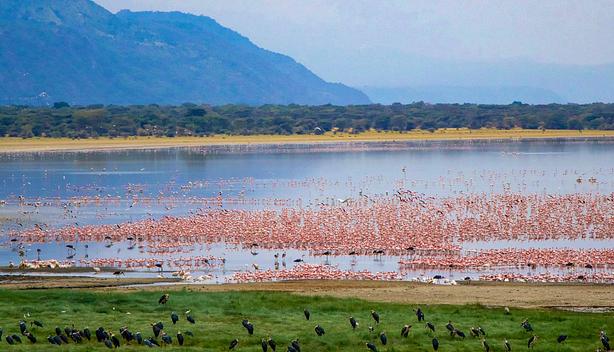
Lake Manyara is renowned for its high concentration of birds, such as flamingoes and pelicans, as well as larger mammals (several species of primates, hippos, and elephants, not to mention the elusive tree-climbing lions.

Katavi National Park

This National Park is in Rukwa Region at Mpanda District 40km south of the Mpanda town, southern eastern Tanzania. The Park is famous for its undisturbed natural face compared to other National Parks in the country. The main vegetation is Miombo woodland with scattered acacia trees near lake Chada, rich in birdlife and the highest population of Crocodile in Tanzania. 
Major attraction includes Lake Katavi with its vast short-grass flood plains in the North. Palm fringed lake in the park includes Zebra, roan antelopes, Sable, Elands, Leopards, Elephants, Buffalo, Lion, Crocodiles, And water fowls. 

GOMBE STREAM NATIONAL PARK

Situated some 16 km north of Kigoma town, Gombe Stream is the smallest park in Tanzania with an area of 52 sq. km of lands. Commissioned in 1968, Gombe is a narrow strip of a mountainous country bounded to the East by the crest of the Rift Valley escarpment and by Lake Tanganyika. The beauty of that park is unique; it is a park without roads, where you can walk and experience nature with all your senses. The park’s vegetation varies from the evergreen forests of tall trees to open woodlands and grasslands. Common mammals found are forest species, mostly primates including chimpanzees, baboons, blue monkeys, red tailed monkeys and red colobus monkeys.

MAHALE MOUNTAINS NATIONAL PARK

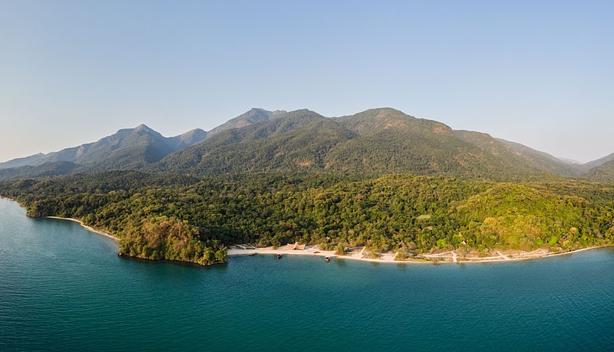
Gazetted in 1980, Mahale Mountains National Park lies 120 km south of Kigoma town on a peninsula that cuts out into Lake Tanganyika. The park has an area of 1,577 sq. km and is dominated by the Mahale Mountains Chain running from north-west across the middle of the park. The highest peak being 2,462 meters above sea level. The park vegetation is mainly Miombo woodland with narrow strips of riverine forests. The park enjoys the habitat of a variety of animal species from elephants, warthogs, giraffes, zebras, roan antelopes, buffaloes, hyenas, wild dogs to lions in the eastern woodland. Chimpanzees, blue monkeys are also found in Mahale. According to recent census, there are more than 700 chimpanzees in about 15 communities.
Both Gombe Stream National Park and Mahale Mountains National Park provide ornithologists with an outstanding opportunity to view the more than 340 species that have been sighted there. Travel on Lake Tanganyika can also be arranged.

Kigoma town is situated on the shores of the world’s longest and second deepest lake, Lake Tanganyika. Only 10 km from the famous Ujiji where journalist Henry Morton Stanley found the ailing Dr. David Livingstone and greeted him with the immortal words ‘’ Dr. Livingstone I Presume ‘’, Kigoma town is the main gate to the Gombe Stream and the Mahale Mountains National Parks.


Explore Tours and Safaris, Activities and Accommodation options in Tanzania